
Most small businesses do not get into trouble because the owner made one bad decision. They get into trouble because nobody looked at the numbers for three months, and three small problems became one big one.
The fix is not hiring a finance team. It is a short, boring, regular check. Block 30 minutes in the first week of every month and work through these seven questions in order.
1. Did cash go up or down, and why? (5 minutes)
Start with the simplest number there is: the bank balance at the end of last month compared with the month before.
If it went down, you should be able to explain why in one sentence. “We paid the annual insurance” is fine. “I’m not sure” is the signal to keep reading carefully.
2. Who owes you money, and for how long? (5 minutes)
List every unpaid invoice and how many days overdue it is. Pay the most attention to anything past 30 days, because the older an invoice gets, the less likely it is to be paid in full.
For each one, decide the next action: a friendly reminder, a phone call, or a conversation about a payment plan. Then do it this week, not “soon”.
3. Is every bank line accounted for? (5 minutes)
Scan last month’s bank transactions for anything you cannot explain:
- charges you do not recognise
- the same amount from the same vendor twice in a few days (possible duplicate)
- money that came in without a client attached to it
- expenses filed as “Other” (a sign something has not been sorted properly)
This is where small leaks hide, like a subscription nobody uses or a vendor that billed twice. Catching them monthly keeps them small.
4. What did you actually earn? (5 minutes)
Now look at the three statements every business has, even if nobody prints them:
- Income statement (profit and loss): what you earned minus what you spent, for the month. Are you profitable?
- Balance sheet: what the business owns versus what it owes, right now. Is it getting stronger?
- Cash flow statement: where the cash actually came from and went. Profit and cash are not the same thing, and this shows the difference.
You do not need to analyse them line by line. Compare each one with last month and look for anything that moved a lot.
5. What is coming up? (3 minutes)
Look ahead 30 to 60 days. Which large payments are due: payroll, rent, a tax instalment, a loan payment, an annual renewal? Make sure the money will be there when they land.
6. What does the pipeline say about next month? (4 minutes)
Check the deals you expect to close soon and how likely each one really is. If next month looks light, now is the time to push follow-ups, not in three weeks.
7. Are you on track for the year? (3 minutes)
Compare what you have earned so far this year, plus what is planned, with your goal for the year. Are you ahead, behind or on pace? One honest sentence is enough.
Write down three actions
End the review with no more than three actions for the month. For example: chase the two invoices over 45 days, cancel the unused software, push the proposal that has gone quiet. Three things you actually do beat ten things you meant to do.
How Kaimind makes this faster
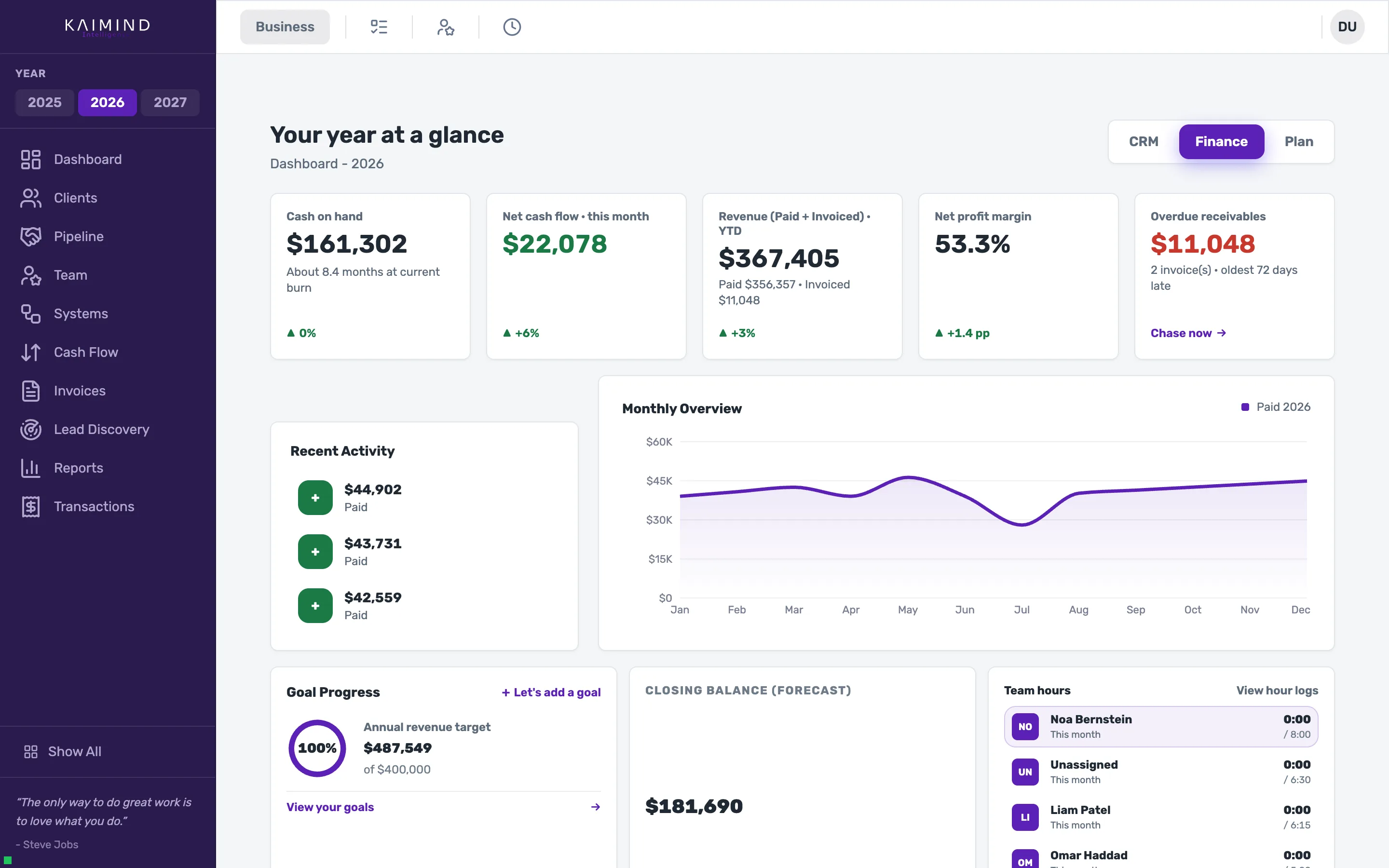
Kaimind keeps your income, expenses, invoices, bank lines and deals in one place, so most of this review is already done before you start.
- Nova, the reporting worker, sends a daily, weekly or monthly report on your numbers: what changed, what needs attention and the payments coming up.
- Arlo, the bookkeeping worker, checks your books on a schedule and flags unreviewed bank lines, possible duplicates, expenses filed as Other and payments that look late. Arlo suggests fixes and you decide.
- The Reports screen gives you the income statement, balance sheet and cash flow statement without building anything.
- Goals shows paid and planned income against your target for the year.
Your 30 minutes turns into reading two short reports and making three decisions.
Start free for 30 days and run your first monthly review this week.